Contact printing for motion picture film: Difference between revisions
| (118 intermediate revisions by the same user not shown) | |||
| Line 1: | Line 1: | ||
=Contact Printing for Motion Picture Film= | =Contact Printing for Motion Picture Film= | ||
Contact printing for motion picture film is a photochemical reproduction process in which an unprocessed raw film stock is exposed while held in direct physical contact with a developed original film, typically a camera negative. Light passes through the negative and exposes the raw stock, producing a positive print. This method has historically been used for distribution prints, work prints, and archival duplication. | |||
'''Types of contact printing: continuous and step printers''' | |||
Motion-picture contact printers are generally classified according to how film transport and exposure are coordinated. Two principal types are historically and technically significant: continuous contact printers and step (or intermittent) contact printers. Each presents distinct operational characteristics, advantages, and limitations. | |||
'''Continuous contact printers''' expose film while both the original and the raw stock move continuously through the printer at a constant speed. Exposure is achieved through a narrow slit or light gate, with printing light intensity regulated mechanically or electrically. Because the film does not come to rest during exposure, continuous printers are well suited to high-throughput laboratory environments and are commonly associated with the industrial production of release prints and work prints. | |||
The principal advantages of continuous printers include mechanical simplicity, high printing speed, and reduced stress associated with repeated start-stop motion. However, because exposure occurs while the film is in motion, image sharpness and registration precision are inherently dependent on transport stability and optical alignment. Most professional continuous printers employ tensioning systems to stabilize the film during printing and to reduce image weave or jitter. This requirement makes continuous printers less suitable for producing prints from fragile or deteriorated archival negatives. Continuous printers also offer limited frame-by-frame exposure control, which can constrain their use for specialized or experimental printing tasks. | |||
'''Step contact printers''', by contrast, operate using intermittent film movement. Each frame of the original and raw stock is advanced into position, held stationary during exposure, and then advanced to the next frame. This step-and-expose process enables precise frame registration and allows for individual frame exposure control. | |||
As a result, step printers are favored for applications requiring high image stability, fine exposure adjustment, or specialized printing techniques, including optical effects, selective printing, and archival duplication. Their limitations include slower printing speeds, increased mechanical complexity, and greater mechanical stress on the film due to repeated intermittent motion. | |||
In practice, the choice between continuous and step contact printing reflects a balance between throughput, mechanical stability, exposure control, and the intended use of the resulting print. Both systems remain relevant within contemporary laboratory and artist-run contexts, where legacy industrial machines are maintained, adapted, or selectively modified to meet differing production and research requirements. | |||
'''Reference:''' | |||
===''' | National Film and Sound Archive of Australia. (n.d.). | ||
Contact printer (Preservation glossary). | |||
https://www.nfsa.gov.au/preservation/preservation-glossary/contact-printer | |||
== Historical overview == | |||
===Early Contact Printing and the Cinématographe=== | |||
The first motion picture device capable of contact printing was the Cinématographe, patented on February 13, 1895 by Auguste Lumière and Louis Lumière. | |||
The Cinématographe was a three-in-one machine, functioning as a camera, projector, and printer. When used for printing, a developed negative was placed in direct contact with unexposed positive film. Both strips were advanced together and exposed to light through the optical system. | |||
[[File:Cinematograp-camera-ouvert.jpg|500px]][[file:1897-cinemato-special-pour-projection.jpg|225px]] | |||
[[File:Comparaisons-pellicules-lumiere (1).jpg|500px]] [[File:05-coupe-brevet.jpg|400px]] | |||
Key characteristics of early contact printing using the Cinématographe: | |||
• '''Intermittent movement:''' A claw mechanism—derived from sewing machine technology—advanced the film frame by frame, ensuring precise registration. | |||
• '''Standardization:''' The use of 35mm film contributed to the format’s eventual adoption as the industry standard. | |||
• '''Portability:''' Weighing approximately 16 lbs (7.3 kg) and operated by a hand crank, it was far more portable than contemporaneous electrically powered studio systems. | |||
• '''Frame-based exposure:''' Each frame was exposed while stationary, minimizing image blur. | |||
Because the same intermittent mechanism was used for filming, projecting, and printing, the Cinématographe is considered an early example of a step contact printer. | |||
{{#ev:youtube|tLE4emgXfKE}} | |||
====Reference:==== | |||
1. Institut Lumière. (n.d.). Le Cinématographe Lumière. | |||
Institut Lumière. | |||
https://www.institut-lumiere.org/le-cinematographe-lumiere | |||
2. Science and Media Museum. (n.d.). A very short history of cinema. | |||
National Science and Media Museum. | |||
https://www.scienceandmediamuseum.org.uk/objects-and-stories/very-short-history-of-cinema | |||
3. Lumière, A., & Lumière, L. (1897). Cinématographe (U.S. Patent No. 579,882). | |||
United States Patent Office.(Patent filed 1896; granted 1897) | |||
https://patents.google.com/patent/US579882A | |||
4. British Film Institute. (n.d.). The Lumière Cinématographe [Video]. | |||
BFI National Archive. | |||
https://www.youtube.com/watch?v=tLE4emgXfKE | |||
===Industrialization of Contact Printing=== | |||
'''Bell & Howell Continuous Contact Printers''' | |||
By the early 1910s, the rapid expansion of the motion picture industry created demand for faster, more consistent, and scalable film printing systems. Bell & Howell emerged as a leading manufacturer of professional laboratory machinery, producing a series of continuous contact printers that became foundational to industrial film printing workflows. | |||
Among these, the Model D and Model C represent two distinct phases in the evolution of laboratory printing: the standardization of mechanical film formats, and the later automation of color and density control. | |||
Both printers employed continuous contact printing, transporting negative and unexposed positive film in constant motion, emulsion-to-emulsion, past a fixed exposure aperture. This approach enabled far greater throughput than step printers and supported the industrial scale of commercial cinema. | |||
====Bell & Howell Model D==== | |||
The Model D was one of Bell & Howell’s earliest commercially successful continuous contact printers, designed specifically for high-volume, industrial print production. | |||
Unlike step printers, the Model D transported both negative and raw positive film in constant motion past the exposure aperture, enabling significantly higher throughput. | |||
Key features and technical characteristics: | |||
• Continuous printing method: Negative and positive film were run emulsion-to-emulsion over a sprocket or roller system. | |||
• Sprocket-driven registration: The leading edges of the perforations were engaged by sprocket teeth to maintain alignment during exposure. | |||
• Subtractive exposure control: Printing density was regulated using subtractive filtering, reducing portions of the light spectrum to control exposure. | |||
• Semi-automatic light control: Exposure adjustments were electrically actuated but determined by the operator and required manual calibration. | |||
• Precision engineering: Built from robust materials for durability and consistency in long production runs. | |||
• Industrial construction: Heavy metal frames and precision gearing were designed for durability and long, uninterrupted production runs. | |||
The Model D was part of a broader ecosystem of Bell & Howell equipment—including the Model D Standard Film Perforator, Standard Cinematograph Camera, and Standard Film Splicing Machine. Together, these machines reinforced mechanical precision across production and laboratory workflows. | |||
2. Bell & Howell Model D/J Continuous Printer | 2. Bell & Howell Model D/J Continuous Printer | ||
[[File:Fwp-model-D-J.jpeg| | [[File:Fwp-model-D-J.jpeg|300px]] [[File:Printing Index Card.png|400px]][[File:Model D.jpg|300px]] | ||
[https://pdwiki.nanwang.org/images/5/5a/BHmodelD.pdf BH Model D Manual] | [https://pdwiki.nanwang.org/images/5/5a/BHmodelD.pdf BH Model D Manual] | ||
=== | ====Bell & Howell Model C==== | ||
The Model C was a more advanced and specialized printer, most commonly configured as an additive color contact printer. It was designed to provide greater automation and fine-grained color control, particularly for color timing and intermediate printing. | |||
Technical characteristics | |||
• Additive color printing system: | |||
A single 1000-watt lamp was optically divided into red, green, and blue beams using dichroic mirrors. | |||
• Independent color channels: | |||
Each beam passed through dedicated mechanical light valves, allowing precise adjustment of exposure values per channel. | |||
• Automatic, tape-controlled operation: | |||
Scene-by-scene color and exposure changes were programmed via punched or magnetic control tape, reducing the need for continuous manual intervention. | |||
• Specialized laboratory role: | |||
Favored for color-critical work where consistency, repeatability, and programmability were essential. | |||
The Model C represents a decisive shift toward automated and systematized color control, anticipating later electronic and digital color timing practices that became standard in high-speed motion-picture printing. | |||
Bell & Howell Model C Continuous Printer | |||
[[File:Fwp-model-c.jpeg|300px]] [[File:Lamphouse.jpg|350px]] [[File:FWP-model-c.jpeg|300px]] | |||
[https://pdwiki.nanwang.org/images/6/61/BH_Manual.pdf BH modelC manual] | |||
picture source: [[https://www.brianpritchard.com/Model%20C.htm |Lamphouse]] [[https://filmwerkplaats.org/?05-equipment-bh-contactprinter |FWP model C]] | |||
====Industrial and Technical impact==== | |||
Together, the Model D and Model C illustrate a transitional phase in laboratory technology in which mechanical film transport and registration remained largely constant, while exposure and color control evolved from manual judgment toward programmable automation. Their coexistence reflects the increasing specialization of motion-picture laboratories as color filmmaking matured. | |||
=====Mechanical Standardization: Film Gauge, Perforation, and Registration (Model D)===== | |||
The primary industrial legacy of the Model D lies in its role in stabilizing mechanical standards for film gauge, perforation geometry, and transport registration under high-speed laboratory conditions. Continuous contact printing imposed strict tolerances on perforation pitch, shape, and alignment; the Model D both relied upon and reinforced these tolerances through sustained industrial use. | |||
Film perforations—sprocket holes—are fundamental to mechanical transport, frame registration, and synchronization across cameras, printers, and projectors. Perforation standards vary by gauge and application, notably Bell & Howell (BH) perforations for camera negatives and Kodak Standard (KS) perforations for release prints. In continuous printers such as the Model D, even minor deviations in perforation geometry could result in image instability, misregistration, or mechanical wear, making dimensional consistency essential. | |||
The Model D functioned within a tightly integrated Bell & Howell mechanical ecosystem that included perforators, cameras, and splicing machines. The precision of this system effectively enforced uniform perforation practice in laboratory workflows, particularly during long, uninterrupted printing runs. Through widespread industrial adoption, Bell & Howell machinery acted as a practical standard-setting mechanism, defining acceptable mechanical tolerances through operation rather than formal specification. | |||
This influence extended beyond 35 mm film. Following the introduction of 16 mm film in 1923, initially manufactured with double perforations, Bell & Howell’s precision-built 16 mm cameras and projectors played a decisive role in translating nominal format definitions into stable mechanical practice. Widespread use consolidated perforation pitch, gauge behavior, and transport reliability across professional and non-theatrical contexts. | |||
These de facto mechanical standards were later formalized by professional engineering bodies such as the Society of Motion Picture Engineers (later SMPTE), whose journals and recommended practices codified film gauges, perforation types, and tolerances already proven viable in Bell & Howell–dominated laboratory systems. | |||
[[File:35mm Film Sprockets.svg.png|200px]] [[File:16mm Sound 1.jpg| 300px]][[File:16mm Sound 2.jpg| 300px]] | |||
The shapes and dimensions of 35 mm sprocket holes. from the SMPE Journal Volume 19, November 1932 | |||
Scans of SMP(T)E/ Society of Motion Picture(Television) Engineers Indexes and Issues Available Online: | |||
https://www.aes.org/aeshc/docs/smpte/smp%28t%29e-journal.html | |||
=====Photochemical and Colorimetric Standards (Model C)===== | |||
The industrial legacy of the Model C is primarily photochemical rather than mechanical. Its additive RGB printing system exerted long-term influence on print stock design, exposure benchmarks, and laboratory calibration practices. | |||
Standards such as Cineon Printing Densities (CPD) and Analytical Printing Densities (APD) are based on the spectral power distribution of the Bell & Howell Model C lamphouse. Modern print film stocks—including the Kodak Vision and Fujifilm Eterna families—are engineered with spectral sensitivities optimized for the narrow-band red, green, and blue illumination produced by Bell & Howell’s dichroic mirror system. | |||
The Model C also introduced the industry-standard printer light scale, typically expressed as a 1–50 range. Each printer light corresponds to a 0.025 Log E exposure change, with 12 points equaling one photographic stop. This discrete exposure logic enabled precise, repeatable scene-by-scene adjustments during high-speed printing. | |||
Prior subtractive systems, such as filter-pack–based ELM methods, were slow and cumbersome to adjust. By contrast, the Model C’s additive architecture allowed near-instantaneous color and density changes via 72-step mechanical light valves, making automated color timing feasible at industrial scale. | |||
Because of the Model C’s long-standing dominance, its exposure logic persists in contemporary digital workflows. Modern color grading systems continue to reference “printer lights,” emulating the original 0.025 Log E increments established by Bell & Howell hardware. | |||
In combination, the Model D and Model C demonstrate how contact printing evolved from a mechanically standardized industrial process into a colorimetrically standardized system whose influence extends into present-day photochemical and digital imaging practices. | |||
https://pdwiki.nanwang.org/images/5/5a/BHmodelD.pdf | |||
https:// | |||
====Reference:==== | |||
'''Bell & Howell contact printers and manuals''' | |||
• Bell & Howell. (n.d.). Standard continuous film printers: Model D [Technical manual].Bell & Howell Company. https://www.filmlabs.org/docs/BHmodelD.pdf | |||
• Bell & Howell. (n.d.). Standard continuous film printers: Model D/J [Technical manual]. | |||
Bell & Howell Company. | |||
https://www.filmlabs.org/docs/BHmodelDJ.pdf | |||
• Pritchard, B. (n.d.). Bell & Howell Model D and J printers. | |||
https://www.brianpritchard.com/Model_D_&_J_Printer.htm | |||
• Pritchard, B. (n.d.). Bell & Howell Model C contact printer. | |||
https://www.brianpritchard.com/Model%20C.htm | |||
• Filmwerkplaats. (n.d.). Bell & Howell contact printer [Equipment description]. | |||
https://filmwerkplaats.org/?05-equipment-bh-contactprinter | |||
'''Film printing practice and technical overviews''' | |||
• Filmlabs. (n.d.). Film printing: Technical overview. | |||
https://www.filmlabs.org/technical-section/film-printing/ | |||
• Filmatlas. (n.d.). Film printing (Entry no. 114). | |||
https://www.filmatlas.com/entry/114 | |||
'''Trade journals and professional standards''' | |||
• Society of Motion Picture Engineers. (1932). SMPE Journal, 19(November). | |||
Society of Motion Picture Engineers. | |||
https://www.brianpritchard.com/SMPE_Standards.htm | |||
https://www.brianpritchard.com/16mm_windings.htm | |||
• Audio Engineering Society. (n.d.). Scans of SMPTE and SMPE journals and indexes. | |||
https:// | AES Historical Committee. | ||
https://www.aes.org/aeshc/docs/smpte/smp%28t%29e-journal.html | |||
'''Bell & Howell cameras and industrial context''' | |||
• Chicagology. (n.d.). Bell & Howell Model 2709 Cinemachinery camera. | |||
https:// | https://chicagology.com/silentmovies/bellhowell2709/ | ||
• Chicagology. (n.d.). Bell & Howell Filmo Cinemachinery camera. | |||
https://chicagology.com/silentmovies/bellhowellfilmo/ | |||
• Chicagology. (n.d.). Bell & Howell Ravenswood factory. | |||
https://chicagology.com/skyscrapers/skyscrapers201/ | |||
• Chicagology. (n.d.). Bell & Howell industrial history [Video]. | |||
https://www.youtube.com/watch?v=9wB0SyrZzDU | |||
===Later Developments and Contemporary Equipment=== | |||
Following the Bell & Howell D/J series, many variations of contact printers were developed for different film gauges and production contexts. Portable contact printers were also introduced, such as the Uhler Cine 16mm printer, the Naval 16mm printer, Hollywood Junior printer and Superior Cine printers. | |||
= | [[File:Compact cine film printer.png|200px|alt=Compact cine film printer]]. [[File:Uhler page 1 & 4.jpg|365px|alt=Uhler Cine 16mm Printer.|border]] [[File:Naval 16mm printer.png|375px]] | ||
Compact cine film printer_______Uhler Cine 16mm Printer ___________________________ Naval 16mm printer | |||
[[File:Superior Cine printers.jpg|310px]] [[File:Hollywood Junior printer.png| 240px]]. [[File:Dutch printer Kinoptiek.jpg|235px]] | |||
Superior Cine printers________________________Hollywood Junior printer_____________Dutch printer Kinoptiek | |||
In contemporary commercial laboratories, large-scale printing is often performed using panel-based systems, such as the BHP Panel Printer, optimized for consistency and throughput rather than manual intervention. | |||
[[File:6127E-6131E.png|500px]]. [[File:7700RD.png|450px]] | |||
====Reference:==== | |||
• Filmlabs. (n.d.). Industrial contact printers (SPECTRAL / Filmwerkplaats project documentation). | |||
Filmlabs. | |||
https://www.filmlabs.org/wiki/en/meetings_projects/spectral/filmwerkplaats-diy-contact-printer/industrial_contact_printers | https://www.filmlabs.org/wiki/en/meetings_projects/spectral/filmwerkplaats-diy-contact-printer/industrial_contact_printers | ||
https:// | • Uhler Corporation. (n.d.). Uhler film printer leaflet [Manufacturer documentation]. | ||
Uhler Corporation. | |||
https://www.brianpritchard.com/Uhler_Printers.htm | |||
• MMT Film Services. (n.d.). Bell & Howell continuous film printers [Equipment overview]. | |||
MMT Film Services. | |||
https://mmtfilm.com/bhp-film-printers | |||
= | == Contemporary Artist-run-Lab Practices and Modifications == | ||
In addition to its role in industrial and mid-century laboratory practice, contact printing continues to be actively used and reimagined within artist-run film labs. These settings often preserve legacy mechanical printers while expanding their functionality through custom electronic and software-based control systems. In other cases, artist-run labs repurpose existing equipment, such as editing tables or projectors, into frame-by-frame contact printers. | |||
===1. Modified B&H Model C=== | |||
During the 2023 SPECTRAL residency program at Filmwerkplaats,[https://film-makerscoop.com/filmmakers/richard-tuohy Richard Tuohy] and [https://film-makerscoop.com/filmmakers/dianna-barrie Dianna Barrie](AU) were invited to create a new work for the 360º Motion Picture Panorama, a large-scale analog projection system composed of a single 16 mm film loop guided through multiple synchronized projectors to form a continuous 360-degree moving image environment. | |||
https://www. | Alongside their artistic production "[https://filmwerkplaats.org/?03-projects-backtothefuture-3-360 Everyday Traffic ]", a panoramic observation of quotidian movement within a Rotterdam public square, Richard demonstrated a custom electronic modification applied to one of the Bell & Howell Model C contact printers in use at Filmwerkplaats. | ||
The original Model C printer regulates three-channel color exposure through mechanically actuated light valves driven by electrically energized solenoid motors. Although the solenoids operate on direct current at high current draw, the modified system switches them using 220–230 V AC relay modules, providing electrical isolation while accommodating the required load characteristics. | |||
Control logic was implemented using an Arduino Mega microcontroller, enabling discrete on/off switching of the red, green, and blue exposure channels. A complementary software layer, written in Python by Barrie, reads a text-based cue file and transmits sequential control instructions to the microcontroller during printer operation. | |||
[[File:Model-c-modification01.png|600px]] [[File:Model-c-modification02.jpg |460px]] | |||
As film transport proceeds, a mechanical cue reader detects physical cue marks—small dents or cut-outs along the perforation edge of the film—triggering corresponding exposure changes in synchronization with image position. This preserves the traditional physical cueing logic of contact printing while extending it through programmable control. | |||
The resulting hybrid configuration integrates a laptop computer with a custom-built Arduino control interface, including physical controls for testing and manual cue execution. Such adaptations illustrate how artist-run laboratories maintain continuity with historical optical-mechanical printing processes while introducing contemporary electronic and software-mediated control for experimental cinematic practice. | |||
===2. Contact printing with a flat-bed editing table.=== | |||
This method is commonly used in many artist-run film labs, particularly at Filmwerkplaats. One key advantage of repurposing an editing table as a contact printer is its ability to accommodate two or more reels at once. By running the negative and unexposed film stock together—emulsion side facing emulsion side—both films are simultaneously exposed by the light source from the editing table. With the addition of a DIY cardboard gate, filmmakers can further manipulate the exposure by incorporating ND or color filters. | |||
Here is an image of a Steenbeck editing table modified into a printer, courtesy of Esther Urlus. | |||
[[File:Diy-table-print.jpeg|400px]] [[File:Diy-table-gate.png|570px]] | |||
===3. projector as contact printer=== | |||
The early Cinématographe, a versatile three-in-one machine capable of functioning as a camera, projector, and contact printer, demonstrates how mechanics can be shared between these different roles. | |||
With some modifications and careful handling, a projector can also serve as a contact printer, provided it is capable of loading both the negative and unexposed film simultaneously. Additionally, rewinders can be used to collect the printed film. | |||
For more on this process, check out [https://www.filmkorn.org/making-diy-prints-from-color-negative-film/?lang=en Malte Bartels's experiments] with contact printing using projectors. | |||
[[File:Malte Bartels-projector-print.png|500px]] | |||
https://www.filmkorn.org/making-diy-prints-from-color-negative-film/?lang=en | |||
===4. Bolex camera as a contact printer=== | |||
The same principle applies when using a camera as a contact-printing device. As Esther Urlus explains: | |||
“The camera itself can be loaded with the negative and print stock in the darkroom, then run without a lens, allowing light to expose the film. Longer sections can be produced this way, but the camera tends to jam due to the double thickness of the film, so a hand-crank assist is recommended. As always, conduct exposure tests before attempting longer runs.” | |||
— Esther Urlus | |||
[https://monoskop.org/File:To_Boldly_Go_A_Starters_Guide_to_Hand_Made_and_DIY_Films.pdf To Boldly Go: A Starter’s Guide to Handmade and DIY Films] | |||
===4. Contact printing with a torch/flashlight=== | |||
The most basic method, requiring no existing film devices or specialized equipment, is glass-plate or direct contact printing. This process involves laying unexposed film flat, placing the original film on top, and pressing the two together with a glass plate. A torch is then moved evenly along the film strip to expose the stock. | |||
This method can also be used to create photograms. Instead of using an original film, objects or substances can be placed directly onto the unexposed film and exposed with a torch. | |||
Although this technique is limited in length—typically to under two meters—it remains widely used in experimental, workshop, and educational contexts due to its simplicity and accessibility. | |||
Other alternative contact-printing methods, such as using editing tables, cameras, or projectors, are step-printing processes. This means that the frame line is extended into the soundtrack area of the film, often resulting in audible artifacts. In contrast, glass-plate or direct contact printing with a moving torch allows for continuous exposure and can produce optical sound on the finished print. | |||
{{#ev:vimeo|409069913}} | |||
Reference: | ===Reference:=== | ||
'''Technical overviews and lab practice''' | |||
• Filmlabs. (n.d.). Film printing: Technical section. | |||
Filmlabs. https://www.filmlabs.org/technical-section/film-printing/ | |||
'''Contact printer modifications and hybrid machines''' | |||
• Filmlabs. (n.d.). Possibilities to upgrade contact printers [Project documentation]. | |||
Filmlabs. | |||
https://www.filmlabs.org/wiki/en/possibilities_to_upgrade | |||
https:// | • Filmwerkplaats. (n.d.). 360º Motion Picture Panorama (Back to the Future III) [Project documentation]. | ||
Filmwerkplaats. | |||
https://filmwerkplaats.org/?03-projects-backtothefuture-3-360 | |||
• Filmwerkplaats. (n.d.). Cinemonta contact printer [Equipment description]. | |||
Filmwerkplaats. | |||
https://filmwerkplaats.org/?05-equipment-cinemonta-contactprinter | |||
'''Alternative contact printing approaches''' | |||
https:// | • Urlus, E. (n.d.). Flatbed printing: Editing table as contact printer. | ||
https://estherurlus.hotglue.me/flatbedprinting | |||
= | • Bartels, M. (n.d.). Making DIY prints from color negative film [Project documentation]. | ||
Filmkorn. | |||
https://www.filmkorn.org/making-diy-prints-from-color-negative-film/?lang=en | |||
• Urlus, E. (n.d.). To boldly go: A starter’s guide to handmade and DIY films. | |||
(Referenced for contact printing using torches, flashlights, and camera-based printing methods) | |||
• Filmkoop Wien. (n.d.). 16mm contact printing workshop. | |||
Filmkoop Vienna. | |||
https://www.filmkoopwien.at/16mm-contact-printing-workshop/ | |||
• Kopierwerk. (n.d.). Making of Kopierwerk [Video]. | |||
Vimeo. https://vimeo.com/409069913 | |||
https:// | ==locally downloaded reference from the web== | ||
For Author only: | |||
[https://hr.data.surf.nl/apps/files/files/24819729?dir=/EGKCW1533%20Envisioning%20Alternative%20Futures%20%28Projectfolder%29/WIKI-page-reference_files/references-Contact%20printing%20for%20motion%20picture%20film Reference archive on HR research drive] | |||
Latest revision as of 22:05, 25 January 2026
Contact Printing for Motion Picture Film
Contact printing for motion picture film is a photochemical reproduction process in which an unprocessed raw film stock is exposed while held in direct physical contact with a developed original film, typically a camera negative. Light passes through the negative and exposes the raw stock, producing a positive print. This method has historically been used for distribution prints, work prints, and archival duplication.
Types of contact printing: continuous and step printers
Motion-picture contact printers are generally classified according to how film transport and exposure are coordinated. Two principal types are historically and technically significant: continuous contact printers and step (or intermittent) contact printers. Each presents distinct operational characteristics, advantages, and limitations.
Continuous contact printers expose film while both the original and the raw stock move continuously through the printer at a constant speed. Exposure is achieved through a narrow slit or light gate, with printing light intensity regulated mechanically or electrically. Because the film does not come to rest during exposure, continuous printers are well suited to high-throughput laboratory environments and are commonly associated with the industrial production of release prints and work prints.
The principal advantages of continuous printers include mechanical simplicity, high printing speed, and reduced stress associated with repeated start-stop motion. However, because exposure occurs while the film is in motion, image sharpness and registration precision are inherently dependent on transport stability and optical alignment. Most professional continuous printers employ tensioning systems to stabilize the film during printing and to reduce image weave or jitter. This requirement makes continuous printers less suitable for producing prints from fragile or deteriorated archival negatives. Continuous printers also offer limited frame-by-frame exposure control, which can constrain their use for specialized or experimental printing tasks.
Step contact printers, by contrast, operate using intermittent film movement. Each frame of the original and raw stock is advanced into position, held stationary during exposure, and then advanced to the next frame. This step-and-expose process enables precise frame registration and allows for individual frame exposure control.
As a result, step printers are favored for applications requiring high image stability, fine exposure adjustment, or specialized printing techniques, including optical effects, selective printing, and archival duplication. Their limitations include slower printing speeds, increased mechanical complexity, and greater mechanical stress on the film due to repeated intermittent motion.
In practice, the choice between continuous and step contact printing reflects a balance between throughput, mechanical stability, exposure control, and the intended use of the resulting print. Both systems remain relevant within contemporary laboratory and artist-run contexts, where legacy industrial machines are maintained, adapted, or selectively modified to meet differing production and research requirements.
Reference:
National Film and Sound Archive of Australia. (n.d.). Contact printer (Preservation glossary). https://www.nfsa.gov.au/preservation/preservation-glossary/contact-printer
Historical overview
Early Contact Printing and the Cinématographe
The first motion picture device capable of contact printing was the Cinématographe, patented on February 13, 1895 by Auguste Lumière and Louis Lumière.
The Cinématographe was a three-in-one machine, functioning as a camera, projector, and printer. When used for printing, a developed negative was placed in direct contact with unexposed positive film. Both strips were advanced together and exposed to light through the optical system.


Key characteristics of early contact printing using the Cinématographe:
• Intermittent movement: A claw mechanism—derived from sewing machine technology—advanced the film frame by frame, ensuring precise registration.
• Standardization: The use of 35mm film contributed to the format’s eventual adoption as the industry standard.
• Portability: Weighing approximately 16 lbs (7.3 kg) and operated by a hand crank, it was far more portable than contemporaneous electrically powered studio systems.
• Frame-based exposure: Each frame was exposed while stationary, minimizing image blur.
Because the same intermittent mechanism was used for filming, projecting, and printing, the Cinématographe is considered an early example of a step contact printer.
Reference:
1. Institut Lumière. (n.d.). Le Cinématographe Lumière. Institut Lumière. https://www.institut-lumiere.org/le-cinematographe-lumiere
2. Science and Media Museum. (n.d.). A very short history of cinema. National Science and Media Museum.
https://www.scienceandmediamuseum.org.uk/objects-and-stories/very-short-history-of-cinema
3. Lumière, A., & Lumière, L. (1897). Cinématographe (U.S. Patent No. 579,882). United States Patent Office.(Patent filed 1896; granted 1897) https://patents.google.com/patent/US579882A
4. British Film Institute. (n.d.). The Lumière Cinématographe [Video]. BFI National Archive. https://www.youtube.com/watch?v=tLE4emgXfKE
Industrialization of Contact Printing
Bell & Howell Continuous Contact Printers
By the early 1910s, the rapid expansion of the motion picture industry created demand for faster, more consistent, and scalable film printing systems. Bell & Howell emerged as a leading manufacturer of professional laboratory machinery, producing a series of continuous contact printers that became foundational to industrial film printing workflows.
Among these, the Model D and Model C represent two distinct phases in the evolution of laboratory printing: the standardization of mechanical film formats, and the later automation of color and density control.
Both printers employed continuous contact printing, transporting negative and unexposed positive film in constant motion, emulsion-to-emulsion, past a fixed exposure aperture. This approach enabled far greater throughput than step printers and supported the industrial scale of commercial cinema.
Bell & Howell Model D
The Model D was one of Bell & Howell’s earliest commercially successful continuous contact printers, designed specifically for high-volume, industrial print production.
Unlike step printers, the Model D transported both negative and raw positive film in constant motion past the exposure aperture, enabling significantly higher throughput.
Key features and technical characteristics:
• Continuous printing method: Negative and positive film were run emulsion-to-emulsion over a sprocket or roller system.
• Sprocket-driven registration: The leading edges of the perforations were engaged by sprocket teeth to maintain alignment during exposure.
• Subtractive exposure control: Printing density was regulated using subtractive filtering, reducing portions of the light spectrum to control exposure.
• Semi-automatic light control: Exposure adjustments were electrically actuated but determined by the operator and required manual calibration.
• Precision engineering: Built from robust materials for durability and consistency in long production runs.
• Industrial construction: Heavy metal frames and precision gearing were designed for durability and long, uninterrupted production runs.
The Model D was part of a broader ecosystem of Bell & Howell equipment—including the Model D Standard Film Perforator, Standard Cinematograph Camera, and Standard Film Splicing Machine. Together, these machines reinforced mechanical precision across production and laboratory workflows.
2. Bell & Howell Model D/J Continuous Printer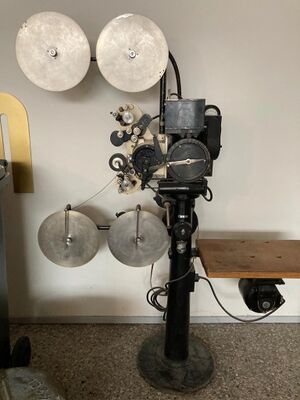
BH Model D Manual


Bell & Howell Model C
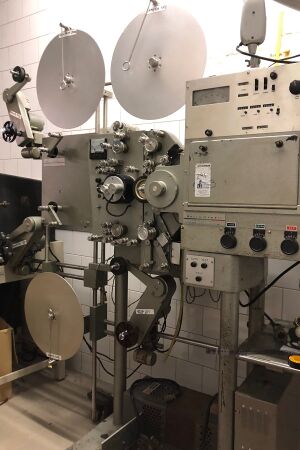
The Model C was a more advanced and specialized printer, most commonly configured as an additive color contact printer. It was designed to provide greater automation and fine-grained color control, particularly for color timing and intermediate printing.
Technical characteristics
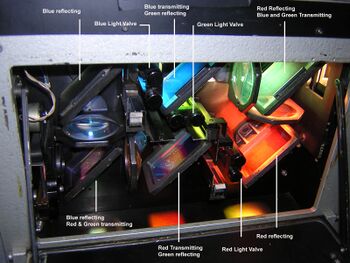
• Additive color printing system:
A single 1000-watt lamp was optically divided into red, green, and blue beams using dichroic mirrors.
• Independent color channels: Each beam passed through dedicated mechanical light valves, allowing precise adjustment of exposure values per channel.
• Automatic, tape-controlled operation: Scene-by-scene color and exposure changes were programmed via punched or magnetic control tape, reducing the need for continuous manual intervention.
• Specialized laboratory role: Favored for color-critical work where consistency, repeatability, and programmability were essential.
The Model C represents a decisive shift toward automated and systematized color control, anticipating later electronic and digital color timing practices that became standard in high-speed motion-picture printing.
Bell & Howell Model C Continuous Printer
BH modelC manual
picture source: [|Lamphouse] [|FWP model C]


Industrial and Technical impact
Together, the Model D and Model C illustrate a transitional phase in laboratory technology in which mechanical film transport and registration remained largely constant, while exposure and color control evolved from manual judgment toward programmable automation. Their coexistence reflects the increasing specialization of motion-picture laboratories as color filmmaking matured.
Mechanical Standardization: Film Gauge, Perforation, and Registration (Model D)
The primary industrial legacy of the Model D lies in its role in stabilizing mechanical standards for film gauge, perforation geometry, and transport registration under high-speed laboratory conditions. Continuous contact printing imposed strict tolerances on perforation pitch, shape, and alignment; the Model D both relied upon and reinforced these tolerances through sustained industrial use.
Film perforations—sprocket holes—are fundamental to mechanical transport, frame registration, and synchronization across cameras, printers, and projectors. Perforation standards vary by gauge and application, notably Bell & Howell (BH) perforations for camera negatives and Kodak Standard (KS) perforations for release prints. In continuous printers such as the Model D, even minor deviations in perforation geometry could result in image instability, misregistration, or mechanical wear, making dimensional consistency essential.
The Model D functioned within a tightly integrated Bell & Howell mechanical ecosystem that included perforators, cameras, and splicing machines. The precision of this system effectively enforced uniform perforation practice in laboratory workflows, particularly during long, uninterrupted printing runs. Through widespread industrial adoption, Bell & Howell machinery acted as a practical standard-setting mechanism, defining acceptable mechanical tolerances through operation rather than formal specification.
This influence extended beyond 35 mm film. Following the introduction of 16 mm film in 1923, initially manufactured with double perforations, Bell & Howell’s precision-built 16 mm cameras and projectors played a decisive role in translating nominal format definitions into stable mechanical practice. Widespread use consolidated perforation pitch, gauge behavior, and transport reliability across professional and non-theatrical contexts.
These de facto mechanical standards were later formalized by professional engineering bodies such as the Society of Motion Picture Engineers (later SMPTE), whose journals and recommended practices codified film gauges, perforation types, and tolerances already proven viable in Bell & Howell–dominated laboratory systems.


The shapes and dimensions of 35 mm sprocket holes. from the SMPE Journal Volume 19, November 1932
Scans of SMP(T)E/ Society of Motion Picture(Television) Engineers Indexes and Issues Available Online:
https://www.aes.org/aeshc/docs/smpte/smp%28t%29e-journal.html
Photochemical and Colorimetric Standards (Model C)
The industrial legacy of the Model C is primarily photochemical rather than mechanical. Its additive RGB printing system exerted long-term influence on print stock design, exposure benchmarks, and laboratory calibration practices.
Standards such as Cineon Printing Densities (CPD) and Analytical Printing Densities (APD) are based on the spectral power distribution of the Bell & Howell Model C lamphouse. Modern print film stocks—including the Kodak Vision and Fujifilm Eterna families—are engineered with spectral sensitivities optimized for the narrow-band red, green, and blue illumination produced by Bell & Howell’s dichroic mirror system.
The Model C also introduced the industry-standard printer light scale, typically expressed as a 1–50 range. Each printer light corresponds to a 0.025 Log E exposure change, with 12 points equaling one photographic stop. This discrete exposure logic enabled precise, repeatable scene-by-scene adjustments during high-speed printing.
Prior subtractive systems, such as filter-pack–based ELM methods, were slow and cumbersome to adjust. By contrast, the Model C’s additive architecture allowed near-instantaneous color and density changes via 72-step mechanical light valves, making automated color timing feasible at industrial scale.
Because of the Model C’s long-standing dominance, its exposure logic persists in contemporary digital workflows. Modern color grading systems continue to reference “printer lights,” emulating the original 0.025 Log E increments established by Bell & Howell hardware.
In combination, the Model D and Model C demonstrate how contact printing evolved from a mechanically standardized industrial process into a colorimetrically standardized system whose influence extends into present-day photochemical and digital imaging practices.
https://pdwiki.nanwang.org/images/5/5a/BHmodelD.pdf
Reference:
Bell & Howell contact printers and manuals
• Bell & Howell. (n.d.). Standard continuous film printers: Model D [Technical manual].Bell & Howell Company. https://www.filmlabs.org/docs/BHmodelD.pdf
• Bell & Howell. (n.d.). Standard continuous film printers: Model D/J [Technical manual]. Bell & Howell Company.
https://www.filmlabs.org/docs/BHmodelDJ.pdf
• Pritchard, B. (n.d.). Bell & Howell Model D and J printers. https://www.brianpritchard.com/Model_D_&_J_Printer.htm
• Pritchard, B. (n.d.). Bell & Howell Model C contact printer. https://www.brianpritchard.com/Model%20C.htm
• Filmwerkplaats. (n.d.). Bell & Howell contact printer [Equipment description]. https://filmwerkplaats.org/?05-equipment-bh-contactprinter
Film printing practice and technical overviews
• Filmlabs. (n.d.). Film printing: Technical overview. https://www.filmlabs.org/technical-section/film-printing/
• Filmatlas. (n.d.). Film printing (Entry no. 114). https://www.filmatlas.com/entry/114
Trade journals and professional standards
• Society of Motion Picture Engineers. (1932). SMPE Journal, 19(November). Society of Motion Picture Engineers.
https://www.brianpritchard.com/SMPE_Standards.htm
https://www.brianpritchard.com/16mm_windings.htm
• Audio Engineering Society. (n.d.). Scans of SMPTE and SMPE journals and indexes. AES Historical Committee. https://www.aes.org/aeshc/docs/smpte/smp%28t%29e-journal.html
Bell & Howell cameras and industrial context
• Chicagology. (n.d.). Bell & Howell Model 2709 Cinemachinery camera. https://chicagology.com/silentmovies/bellhowell2709/
• Chicagology. (n.d.). Bell & Howell Filmo Cinemachinery camera. https://chicagology.com/silentmovies/bellhowellfilmo/
• Chicagology. (n.d.). Bell & Howell Ravenswood factory. https://chicagology.com/skyscrapers/skyscrapers201/
• Chicagology. (n.d.). Bell & Howell industrial history [Video]. https://www.youtube.com/watch?v=9wB0SyrZzDU
Later Developments and Contemporary Equipment
Following the Bell & Howell D/J series, many variations of contact printers were developed for different film gauges and production contexts. Portable contact printers were also introduced, such as the Uhler Cine 16mm printer, the Naval 16mm printer, Hollywood Junior printer and Superior Cine printers.
 .


Compact cine film printer_______Uhler Cine 16mm Printer ___________________________ Naval 16mm printer

 .

Superior Cine printers________________________Hollywood Junior printer_____________Dutch printer Kinoptiek
In contemporary commercial laboratories, large-scale printing is often performed using panel-based systems, such as the BHP Panel Printer, optimized for consistency and throughput rather than manual intervention.
 .

Reference:
• Filmlabs. (n.d.). Industrial contact printers (SPECTRAL / Filmwerkplaats project documentation). Filmlabs. https://www.filmlabs.org/wiki/en/meetings_projects/spectral/filmwerkplaats-diy-contact-printer/industrial_contact_printers
• Uhler Corporation. (n.d.). Uhler film printer leaflet [Manufacturer documentation]. Uhler Corporation. https://www.brianpritchard.com/Uhler_Printers.htm
• MMT Film Services. (n.d.). Bell & Howell continuous film printers [Equipment overview]. MMT Film Services. https://mmtfilm.com/bhp-film-printers
Contemporary Artist-run-Lab Practices and Modifications
In addition to its role in industrial and mid-century laboratory practice, contact printing continues to be actively used and reimagined within artist-run film labs. These settings often preserve legacy mechanical printers while expanding their functionality through custom electronic and software-based control systems. In other cases, artist-run labs repurpose existing equipment, such as editing tables or projectors, into frame-by-frame contact printers.
1. Modified B&H Model C
During the 2023 SPECTRAL residency program at Filmwerkplaats,Richard Tuohy and Dianna Barrie(AU) were invited to create a new work for the 360º Motion Picture Panorama, a large-scale analog projection system composed of a single 16 mm film loop guided through multiple synchronized projectors to form a continuous 360-degree moving image environment.
Alongside their artistic production "Everyday Traffic ", a panoramic observation of quotidian movement within a Rotterdam public square, Richard demonstrated a custom electronic modification applied to one of the Bell & Howell Model C contact printers in use at Filmwerkplaats.
The original Model C printer regulates three-channel color exposure through mechanically actuated light valves driven by electrically energized solenoid motors. Although the solenoids operate on direct current at high current draw, the modified system switches them using 220–230 V AC relay modules, providing electrical isolation while accommodating the required load characteristics.
Control logic was implemented using an Arduino Mega microcontroller, enabling discrete on/off switching of the red, green, and blue exposure channels. A complementary software layer, written in Python by Barrie, reads a text-based cue file and transmits sequential control instructions to the microcontroller during printer operation.


As film transport proceeds, a mechanical cue reader detects physical cue marks—small dents or cut-outs along the perforation edge of the film—triggering corresponding exposure changes in synchronization with image position. This preserves the traditional physical cueing logic of contact printing while extending it through programmable control.
The resulting hybrid configuration integrates a laptop computer with a custom-built Arduino control interface, including physical controls for testing and manual cue execution. Such adaptations illustrate how artist-run laboratories maintain continuity with historical optical-mechanical printing processes while introducing contemporary electronic and software-mediated control for experimental cinematic practice.
2. Contact printing with a flat-bed editing table.
This method is commonly used in many artist-run film labs, particularly at Filmwerkplaats. One key advantage of repurposing an editing table as a contact printer is its ability to accommodate two or more reels at once. By running the negative and unexposed film stock together—emulsion side facing emulsion side—both films are simultaneously exposed by the light source from the editing table. With the addition of a DIY cardboard gate, filmmakers can further manipulate the exposure by incorporating ND or color filters.
Here is an image of a Steenbeck editing table modified into a printer, courtesy of Esther Urlus.


3. projector as contact printer
The early Cinématographe, a versatile three-in-one machine capable of functioning as a camera, projector, and contact printer, demonstrates how mechanics can be shared between these different roles.
With some modifications and careful handling, a projector can also serve as a contact printer, provided it is capable of loading both the negative and unexposed film simultaneously. Additionally, rewinders can be used to collect the printed film.
For more on this process, check out Malte Bartels's experiments with contact printing using projectors.

https://www.filmkorn.org/making-diy-prints-from-color-negative-film/?lang=en
4. Bolex camera as a contact printer
The same principle applies when using a camera as a contact-printing device. As Esther Urlus explains:
“The camera itself can be loaded with the negative and print stock in the darkroom, then run without a lens, allowing light to expose the film. Longer sections can be produced this way, but the camera tends to jam due to the double thickness of the film, so a hand-crank assist is recommended. As always, conduct exposure tests before attempting longer runs.”
— Esther Urlus To Boldly Go: A Starter’s Guide to Handmade and DIY Films
4. Contact printing with a torch/flashlight
The most basic method, requiring no existing film devices or specialized equipment, is glass-plate or direct contact printing. This process involves laying unexposed film flat, placing the original film on top, and pressing the two together with a glass plate. A torch is then moved evenly along the film strip to expose the stock.
This method can also be used to create photograms. Instead of using an original film, objects or substances can be placed directly onto the unexposed film and exposed with a torch.
Although this technique is limited in length—typically to under two meters—it remains widely used in experimental, workshop, and educational contexts due to its simplicity and accessibility.
Other alternative contact-printing methods, such as using editing tables, cameras, or projectors, are step-printing processes. This means that the frame line is extended into the soundtrack area of the film, often resulting in audible artifacts. In contrast, glass-plate or direct contact printing with a moving torch allows for continuous exposure and can produce optical sound on the finished print.
Reference:
Technical overviews and lab practice
• Filmlabs. (n.d.). Film printing: Technical section. Filmlabs. https://www.filmlabs.org/technical-section/film-printing/
Contact printer modifications and hybrid machines
• Filmlabs. (n.d.). Possibilities to upgrade contact printers [Project documentation]. Filmlabs. https://www.filmlabs.org/wiki/en/possibilities_to_upgrade
• Filmwerkplaats. (n.d.). 360º Motion Picture Panorama (Back to the Future III) [Project documentation]. Filmwerkplaats. https://filmwerkplaats.org/?03-projects-backtothefuture-3-360
• Filmwerkplaats. (n.d.). Cinemonta contact printer [Equipment description]. Filmwerkplaats. https://filmwerkplaats.org/?05-equipment-cinemonta-contactprinter
Alternative contact printing approaches
• Urlus, E. (n.d.). Flatbed printing: Editing table as contact printer. https://estherurlus.hotglue.me/flatbedprinting
• Bartels, M. (n.d.). Making DIY prints from color negative film [Project documentation]. Filmkorn. https://www.filmkorn.org/making-diy-prints-from-color-negative-film/?lang=en
• Urlus, E. (n.d.). To boldly go: A starter’s guide to handmade and DIY films. (Referenced for contact printing using torches, flashlights, and camera-based printing methods)
• Filmkoop Wien. (n.d.). 16mm contact printing workshop. Filmkoop Vienna. https://www.filmkoopwien.at/16mm-contact-printing-workshop/
• Kopierwerk. (n.d.). Making of Kopierwerk [Video]. Vimeo. https://vimeo.com/409069913
locally downloaded reference from the web
For Author only: